Addax nasomaculatus (Blainville, 1816)
Addax Rafinesque, 1815
Species recognized by The Integrated Taxonomic Information System
, T Orrell (custodian) in
Table of Contents
-
-
-
-
-
-
-
-
-
-
-
-
-
-
-
-
-
-
-
-
-
-
-
-
-
- Add New Content
Overview
Biology
Source and Additional Information
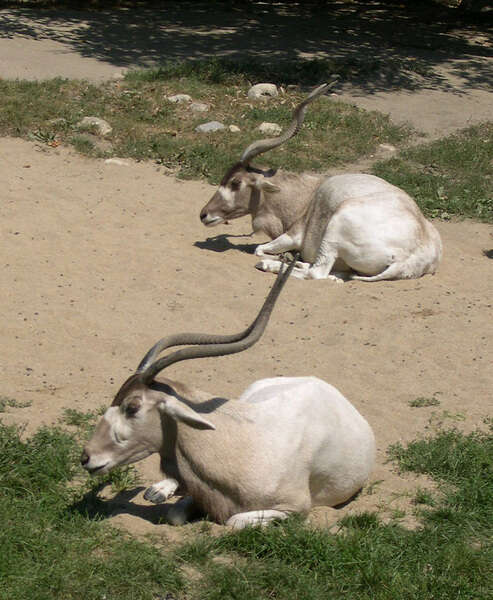
These antelope are mainly active during the night, particularly in the hot season; in the day, they dig 'beds' into the sand under shade to avoid the heat of the desert sun (2), and also to shelter from sandstorms (10). Small nomadic herds spend most of their time wandering in search of food (5); these previously numbered around 20 individuals but today groups are only two to four strong and lone individuals are also seen (6). When the population was more abundant, these antelope migrated seasonally between the Sahara and the Sahel and aggregations of 1,000 individuals were seen (7). The herds are led by a dominant male and breeding can occur all year round (5). Males defend territories and mate with more than one female. Usually a single young is born and is fully weaned at around a month old (5). In captivity, addax can live up to 25 years (5). Addax feed on desert grasses, but will also browse on herbs and acacia species if grass is unavailable (8). Addax are able to obtain all the water they need from their food and their range is therefore not generally restricted by available water sources (5).
"Addax nasomaculatus (Blainville, 1816)". Encyclopedia of Life, available from "http://www.eol.org/pages/331074". Accessed
22 Mar 2010.
Retrieving comments, please wait...


Retrieving comments, please wait...
Loading curation controls, please wait...