
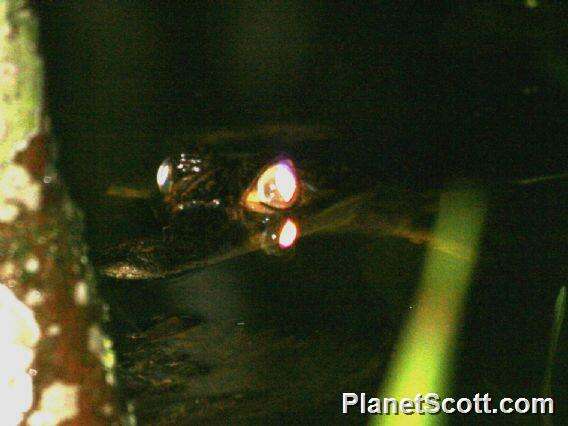
Melanosuchus niger SPIX 1825

Black caiman


Species recognized by P Uetz, TIGR Reptile Database external link in 
IUCN Red List Status: Lower Risk/conservation dependent (LR/cd) external link Showing: scientific names

Media Center Navigation


Melanosuchus niger SPIX 1825

Images


Items in yellow are not reviewed.

Choose images

Melanosuchus niger
Melanosuchus niger

Page navigation


Classification : Text | Graphic |

Overview

Biology

Source and Additional Information
Supplier
Location
Citation

Black caiman typically hunt at night, using their acute sight and hearing to locate their prey (2). Fish comprise the major part of the black caiman's diet, particularly catfish and the much-feared piranha, but adult black caiman also tackle much larger prey such as capybara, turtles and deer (4). Domestic animals such as dogs and pigs may be taken by large adult caiman, and there are even reports of people being the victim of an attack. Juvenile black caiman stick to smaller foods, including crustaceans, other invertebrates such as snails, and fish (4). Female black caiman are thought to start nesting during the dry season when water levels fall and fish are forced to congregate in shallow pools, providing an easy and plentiful meal (4). Plant material is used to build a mound nest measuring about 1.5 metres across, into which a large clutch of up to 65 eggs are laid (4). The female will remain close to the nest, waiting for between 42 and 90 days until the eggs begin to hatch, before opening the nest to assist with the hatching process (2). As many females often nest within close proximity, large numbers of hatchlings all emerge at once at the beginning of the wet season, gaining some safety in numbers (2).
"Melanosuchus niger SPIX 1825". Encyclopedia of Life, available from "http://www.eol.org/pages/1055872". Accessed 20 Mar 2010.