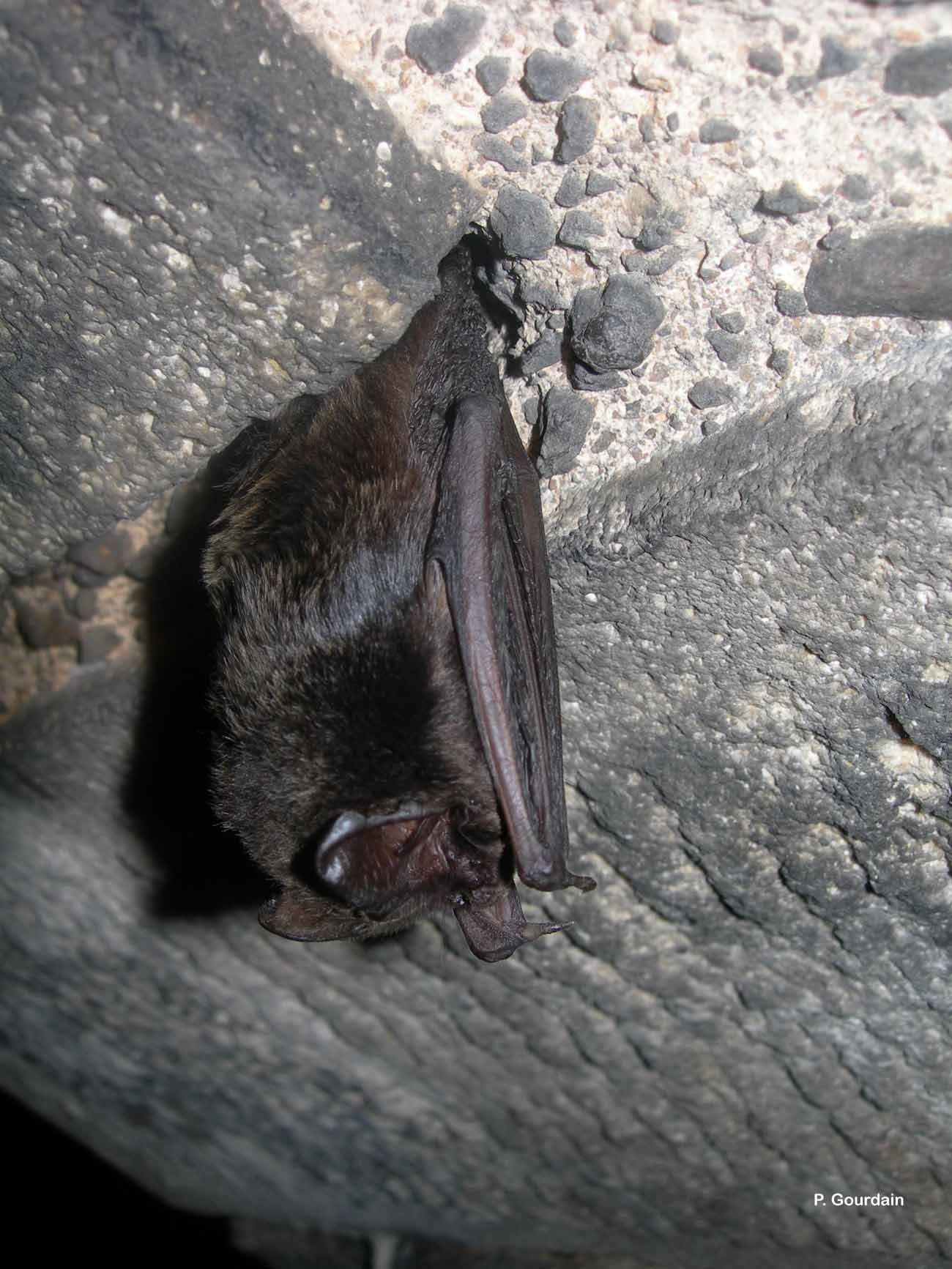
Barbastella barbastellus (Schreber, 1774)

Western Barbastelle


Species recognized by The Integrated Taxonomic Information System external link, T Orrell (custodian) in 
IUCN Red List Status: Near Threatened (NT) external link Showing: scientific names

Media Center Navigation


Barbastella barbastellus (Schreber, 1774)

Images


Items in yellow are not reviewed.

Choose images

Barbastella barbastellus (Schreber, 1774)
Barbastella barbastellus

Page navigation


Classification : Text | Graphic |

Overview

Biology

Source and Additional Information
Supplier
Location
Citation

Barbastelle bats emerge at early dusk. They hunt low over water or at tree-top level with fast agile flight (2). They hunt small insects such as flies and moths on the wing (2) but can also glean spiders and insects from plants (3). They only take delicate small prey items, as the mouth has a narrow gape and the teeth are relatively weak (2). In their second year, females become sexually mature, and mating occurs in autumn. The females gather in maternity roosts or nurseries and give birth to one, or rarely two offspring. During this time, males form small groups and live away from the nurseries (2).
"Barbastella barbastellus (Schreber, 1774)". Encyclopedia of Life, available from "http://www.eol.org/pages/327185". Accessed 18 Mar 2010.