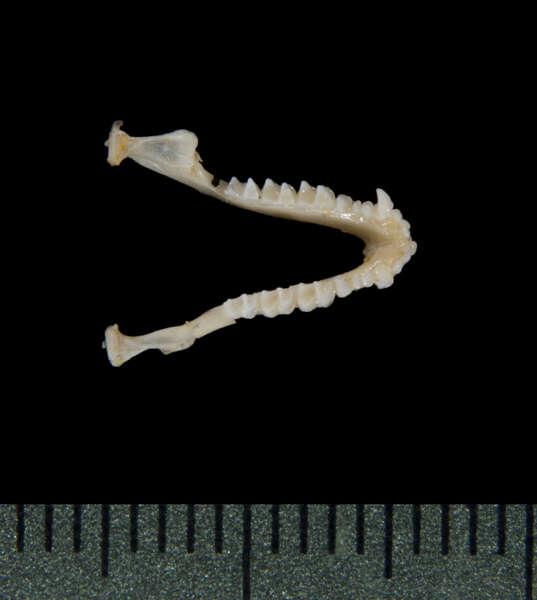
Lasionycteris noctivagans (LeConte, 1831)

Silver-haired bat


Species recognized by The Integrated Taxonomic Information System external link, T Orrell (custodian) in 
IUCN Red List Status: Least Concern (LC) external link Showing: scientific names

Media Center Navigation


Lasionycteris noctivagans (LeConte, 1831)

Images


Choose images

Lasionycteris noctivagans

Page navigation


Classification : Text | Graphic |

General Description

Description

Source and Additional Information

Somewhat resembling the larger hoary bat, the silver-haired bat has frosted tips on the black or dark-brown fur of its back. Silver-haired bats occur in both grassland and forest, and are abundant in old-growth forest. They feed on small flying insects, especially moths, using echolocation to navigate and hunt. They start foraging after sunset, finding their prey at treetop level or over streams and ponds. Seasonal changes in the numbers of bats have been observed: more individuals are seen farther north in the summer and farther south in winter, suggesting that the species is probably migratory. However, these bats can enter torpor for energy conservation, and some individuals may not migrate.

Links:
Mammal Species of the World
Click here for The American Society of Mammalogists species account
References
  • LeConte, J., In McMurtrie, H., 1831.  The animal kingdom arranged in conformity with its organization. (By Baron Cuvier, trans. from French with notes and additions by McMurtrie), p.431.  Carvill, New York, 1:1-448.
"Lasionycteris noctivagans (LeConte, 1831)". Encyclopedia of Life, available from "http://www.eol.org/pages/327556". Accessed 22 Mar 2010.