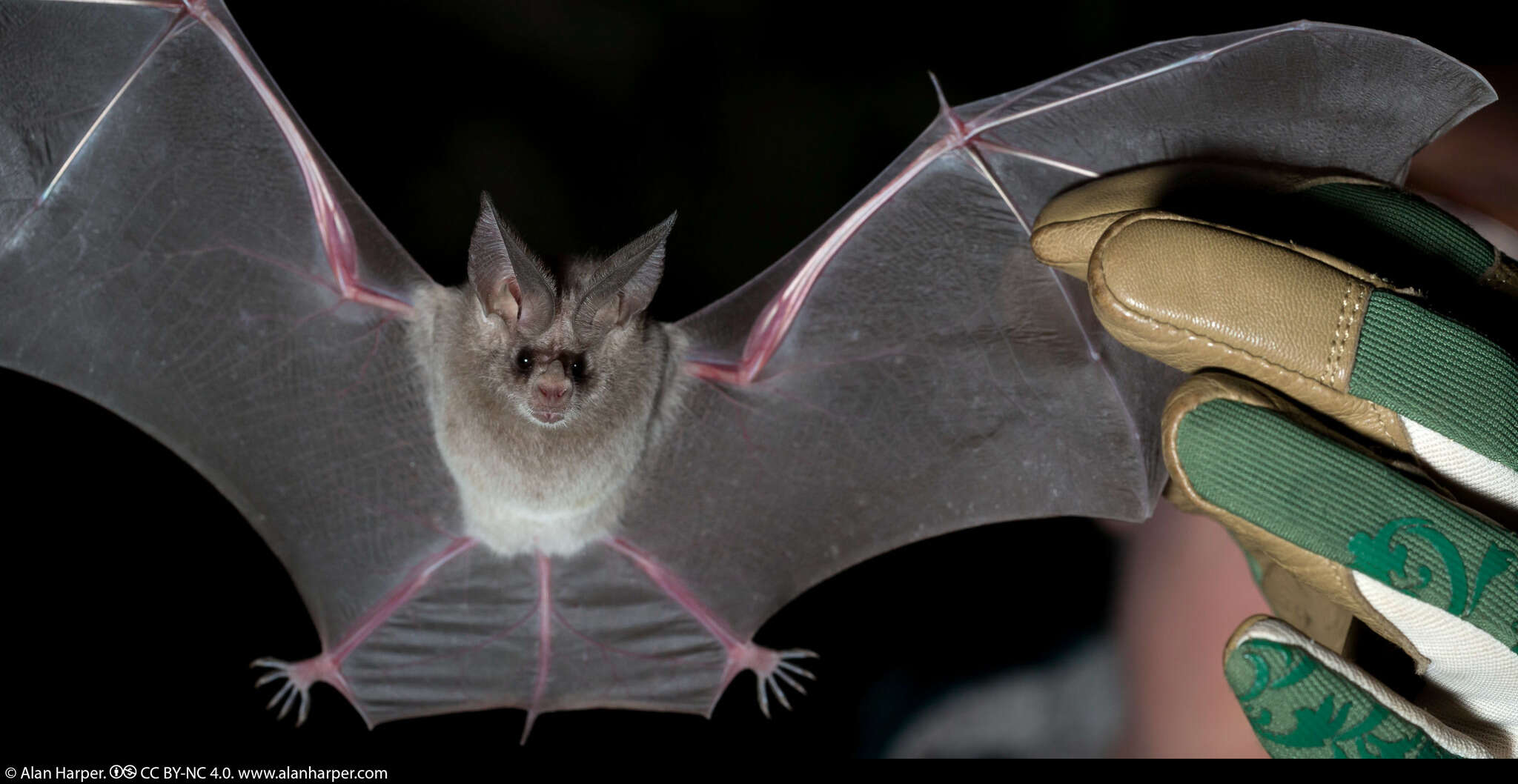
Macrotus californicus Baird, 1857
California leaf-nosed bat
Species recognized by The Integrated Taxonomic Information System
, T Orrell (custodian) in
Table of Contents
-
-
-
-
-
-
-
-
-
-
-
-
-
-
-
-
-
-
-
-
-
-
-
-
- Add New Content
General Description
Description
Source and Additional Information
California leaf-nosed bats usually use their sense of sight (rather than echolocation) when they are foraging, and resort to echolocation only in total darkness. They fly slowly, close to the ground or to vegetation, and often take butterflies and katydids, which are immobile at night when the bats are hunting. They do not migrate or hibernate. They cope with the temperate desert by finding warm daytime roosts in caves, mines, or buildings. In the winter, large groups roost together in long, warm mine tunnels, usually in geothermally-heated rock, and forage only for about two hours each night. Pups are born from May to July in maternity colonies that are also often located in caves. There are about 100-200 females in a maternity colony, each with a single pup.
Links:
Mammal Species of the World
Links:
Mammal Species of the World
References
- Baird, Spencer., 1858. Proceedings of the Academy of Natural Sciences of Philadelphia, 10:116.
"Macrotus californicus Baird, 1857". Encyclopedia of Life, available from "http://www.eol.org/pages/327875". Accessed
17 Mar 2010.

Retrieving comments, please wait...


Retrieving comments, please wait...
Loading curation controls, please wait...