Table of Contents
-
-
-
-
-
-
-
-
- Add New Content
General Description
Description of Ciliophora
Source and Additional Information
The ciliates. One of the most familiar groups of protozoa, distinguished by usually having many cilia lying in rows on the body and used for movement, sometimes with more cilia around the mouth and used for feeding. Typically between 10 and 500 microns in length. One of the characteristics that is very unusual is that ciliates have two kinds of nuclei - diploid micronuclei and selectively polyplopid macronuclei within each cell.
Description of Ciliophora
Source and Additional Information
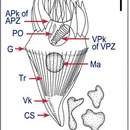
Alveolates with nuclear dimorphism - co-existence of a selectively polyploid macronucleus and diploid micronucleus, flagella = cilia numerous at some stage, somatic cilia in rows (kineties), and the bases of the cilia giving rise to elements of the cortical cytoskeleton; cortex perforated by mouth or mouths, cytopyge (= cell anus), opening of contractile vacuoles, and egress points for ejectisomes. Common, widespread in most aquatic habitats. Many descriptive terms relate to the pattern of oral or somatic cilia as revealed by silver staining.
"Ciliophora". Encyclopedia of Life, available from "http://www.eol.org/pages/4666". Accessed
20 Mar 2010.


Retrieving comments, please wait...


Retrieving comments, please wait...
Loading curation controls, please wait...


Retrieving comments, please wait...