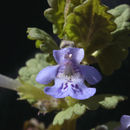
Glechoma hederacea L.

Ground ivy


Species recognized by The Integrated Taxonomic Information System external link, T Orrell (custodian) in 
IUCN Red List Status: NOT EVALUATED external link Showing: scientific names

Media Center Navigation


Glechoma hederacea L.

Images


Choose images

Glechoma hederacea L.
Glechoma-hederacea
Glechoma-hederacea
Glechoma-hederacea
Glechoma-hederacea
Glechoma-hederacea
Glechoma-hederacea
Glechoma-hederacea
Glechoma-hederacea

Page navigation

Page 1 Next


Classification : Text | Graphic |

General Description

Comments

Source and Additional Information
Project
Editor
Wu Zhengyi, Peter H. Raven & Hong Deyuan
Location
Citation
Flora of China Vol. 17: 118 in eFloras.org, Missouri Botanical Garden. Accessed Nov 12, 2008.

Used medicinally for pneumonia and nephritis.

Description

Source and Additional Information
Project
Editor
Wu Zhengyi, Peter H. Raven & Hong Deyuan
Location
Citation
Flora of China Vol. 17: 118 in eFloras.org, Missouri Botanical Garden. Accessed Nov 12, 2008.

Stems 10-17 cm, ascending, base purplish, subglabrous, nodes retrorse strigose. Petiole of basal leaves 3.5-4 cm, 0.8-1.8 cm in upper leaves, with sparse, retrorse, minutely hooked hairs; upper blade larger than basal one, reniform to reniform-orbicular, 0.8-1.3 × ca. 2 cm, glabrous except sometimes sparsely retrorse strigose on abaxial veins, margin ± coarsely crenate, apex rounded. Cymes 2-4-flowered, in verticillasters; bracts and bracteoles subulate, ca. 1 mm. Calyx tubular, slightly curved at apex, 5-7 mm, hirtellous; teeth ovate, ca. 1 mm, apex acute, ciliate. Corolla purple, ca. 1 cm, hirtellous; tube ca. 7.5 mm, straight, funnelform; upper lip straight, ca. 3 mm, 2-lobed, lobes oblong; lower lip obliquely spreading, ca. 4 mm, middle lobe flabellate, apex emarginate; lateral lobes ovate. Nutlets unknown. Fl. May.

Comments

Source and Additional Information
Author
Location
Citation

Ground Ivy is an important source of nectar during the spring for bees. Otherwise, its ecological value is rather low. The size and color of the flowers are somewhat variable. This species resembles another introduced member of the Mint family, Lamium amplexicaule (Henbit), which is also an aggressive spreader. However, the opposite leaves of Henbit are more widely spaced along its spreading stems and they strongly clasp the stems, while the leaves of Ground Ivy have long petioles. The flowers of Henbit occur in whorls from the axils of the upper leaves, and they are more erect and pink than the flowers of Ground Ivy. Other members of the Mint family usually have an erect habit, while the stems of Ground Ivy often sprawl about and form loose mats. Another common name for this species is Gill-over-the-Ground, which is more often used in England.

Description

Source and Additional Information
Author
Location
Citation

This introduced perennial plant is usually 1' or less, branching frequently and forming a low-growing mat of stems and leaves across the ground. The 4-angled stems are prostrate to slightly ascending, and often form rootlets near the axils of the leaves when they touch the ground. The opposite leaves are about 1" long and across. They are green to purplish green, orbicular, and crenate along the margins. There is a flat indentation where the long petiole joins the base of a leaf. The pubescent upper surface has conspicuous palmate venation. Clusters of 1-3 tubular flowers develop from the leaf axils. These flowers are bluish violet to reddish purple and about ½" in length. The corolla of each flower is narrow at the base, but flares outward like a trumpet into spreading lobes. There is a notched upper lobe, a notched lower lobe, and 2 smaller side lobes. The lower lobe is larger than the others and functions as a landing pad for visiting insects. It has darker violet lines that function as nectar guides. Within the throat of the corolla, there are fuzzy hairs. Each flower has a single pistil with a divided style, 2 long stamens, and 2 short stamens. The pubescent calyx is about 1/3 the length of the tubular corolla, with 15 veins running along its length and 5 teeth along its outer edge. The blooming period usually occurs from mid-spring to early summer for about 2 months, although some plants may bloom later in the year if they remain in cool shade or a major disturbance prevents earlier bloom. Upon maturity, each flower is replaced by 4 dark brown nutlets. Each nutlet is ovoid, with 2 flat sides and an outer side that is rounded. The root system is fibrous and shallow. This plant often forms dense colonies by forming rootlets along the stems.
"Glechoma hederacea L.". Encyclopedia of Life, available from "http://www.eol.org/pages/483313". Accessed 19 Mar 2010.