Pteronura brasiliensis (Gmelin, 1788)
Giant Otter
Species recognized by The Integrated Taxonomic Information System
, T Orrell (custodian) in
Table of Contents
-
-
-
-
-
-
-
-
-
-
-
-
-
-
-
-
-
-
-
-
-
-
-
-
-
- Add New Content
Overview
Biology
Source and Additional Information
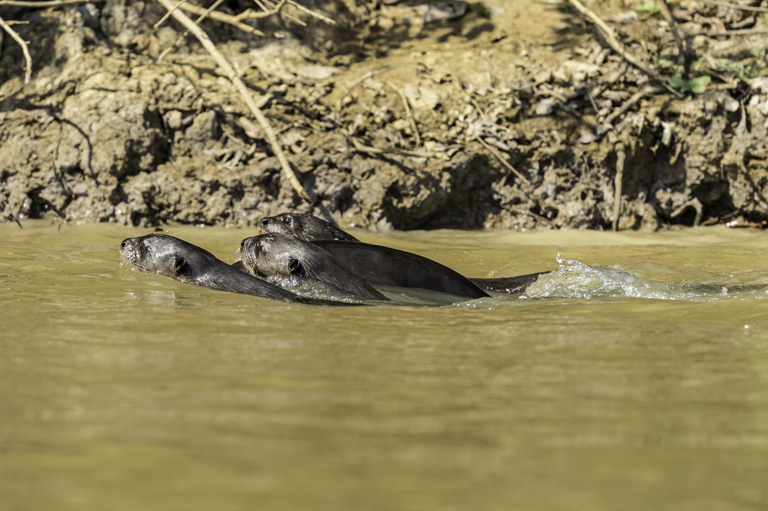
Giant otters generally live in family groups of three to nine individuals, composed of a breeding pair and their offspring (6). These groups, also known as 'holts' (4), rest, play, sleep, travel and fish together (6). Members of the group use communal latrines and rub their faeces and urine into the earth with their front paws, in order to advertise the group's residency (5). Breeding can take place throughout the year, although most young are born in during the dry season. Litter size varies from one to five 'kits', following a 52 to 70 day gestation. The new cubs are cared for by both the parents and older siblings. At two to three weeks they are put in the water by their mother, and at three to four months of age, the cubs begin hunting and travelling with the family. They are weaned at nine months, and are as efficient hunters as their parents by the age of ten months, although they remain with the family group for at over another year (6). These otters are diurnal and semi-aquatic, and despite their clumsy appearance on land they are known to travel large distances between areas of water. The diet is composed almost exclusively of fish (6), but they are also known to eat caimans, anacondas, other snakes and even the occasional heron (7).
"Pteronura brasiliensis (Gmelin, 1788)". Encyclopedia of Life, available from "http://www.eol.org/pages/328029". Accessed
19 Mar 2010.

Retrieving comments, please wait...